Showing posts with label Theatre. Show all posts

Friday, May 30, 2014

The first time as tragedy; the second as farce: time-shifting 'Arden of Faversham' - Swan Theatre, RSC Friday 23 May 2014

Polly Findlay's new RSC production of the anonymous Renaissance play 'Arden of Faversham' shifts it from its usual 16th Century setting to a loosely 'modern' period.  Certainly, both Findlay (as director) and Zoe Svendsen (as dramaturg) are keen to emphasise contemporary parallels between the commodification of land, people and property then and now, and the shift of housewives from makers to consumers.  This time-shifting from the late 1500s to a modern but non-specific present day moment, seems to have thrown some reviewers, as if mentally adjusting from the outer gothic frames of the Swan theatre to a stage filled with the clutter of mass packaging for the contemporary consumer age (and fashions to match) makes the play text incomprehensible.  I'd argue that it is actually pretty easy to overlook lines that (rightly, for the 16th Century) make London feel a world away, since whatever London's proximity is now in terms of communications and travel, the capital can still feel a world away from provincial business and domestic life.  

Grumbly Michael Billington, didn't like the period shift at all. Personally, I feel a period setting in Elizabethan costume would likely appear similarly artificial.  Nevertheless, there are elements that feel as if they are overstating realisations about 'capitalism for beginners'.  Arden's business is the distribution of tacky ornaments, not least an endless supply of marineki neko, the gold Japanese beckoning cats, symbolic of prosperous good fortune (oh irony when a wall of them is unveiled after Arden is killed). Arden's employees are engaged in drudgery: endless, pointless, mechanised processes carried out by humans for no particular purpose of adding anything to the product, experience or success of anyone (except Arden himself).  Work sucks; bosses are narcissistic and greedy; everyone wants a prosperous and more convenient life: we get it, with bright flashy clothes to ram the point home.


Former butcher-boy Mosby and Arden's wife


But don't be deceived: what the play lacks in subtlety (in its production setting or the prose - no Shakespeare is this) or indeed length (it is a sprightly 1 hour 40, with no interval) it more than makes up for with some wonderfully portrayed supporting characters and a healthy infusion of verve and wit. 

The tale may ostensibly be about businessman Arden (Ian Redford), his unfaithful wife Alice (Sharon Small), and her lover Mosby (Keir Charles), but the Arden employees Michael (Ian Bonar) and Mosby's sister Susan (Elspeth Brodie) - a hapless, servile, near-silent figure who regularly haunts the stage and production - keep getting our attention even as the play heads towards the inevitable murder of the titular character.  The tragedy is not really about Arden, for all that he meets an undignified death as the disposable body of capitalism: a domestic murder for domestic reasons.  Arguably, it is not even about the vivacious, capricious wife Alice, who all too late realises the enormity of her actions and choices.  Rather it is Susan and a would-be husband Michael that intrigue.  


Susan: hidden, at the edges


Produced as part of the 'Roaring Girls' season at the RSC, the publicity has been all around Small as Alice Arden.  She certainly roars - with laughter, with lust, with anger and murderous desire.  But it is the mouse that doesn't roar who I keep thinking about: Susan.  Her brother Mosby tries to match her one way: with oily poisoner painter Clarke (Christopher Middleton).  Her mistress, Alice Arden, meanwhile promises her to Arden employee Michael.  Neither Mosby nor Alice seem especially concerned to consider Susan's own preferences, and it doesn't seem to bother either prospective husband much, with both Clarke and Michael careless as to whether Susan may have a role to play in her choice of 'owner'.  Michael is at least ambivalent in how he is drawn into the murderous plotting: he doesn't really want to get involved but his desire to match with Susan becomes blinded and complicit to the actions of those around him.  That Susan is condemned and put to death alongside more active and duplicitous participants in the murder of Arden is perhaps the real tragedy of the play.*

Despite that tragedy, the production does make good use of some of the underlying elements of farce in the text, including the (not-so-original) bungling hitmen Black Will and Shakebag, ably brought to life by Jay Simpson and Tony Jayawardena.


Silent Bob and Jay

These two present violent slapstick and murderous intent thwarted by fog, timing and choices but mostly by general incompetence.  Indeed, the oleaginous Clarke is far more disturbing than they are, as it seems even Clarke's own flesh rebels against his exploits with poison and paint (rashes across his skin, gloved hands, hair and flesh that drips with contamination). By contrast the seemingly 'professional' killers - Will and Shakebag - are perpetually in more danger from each other than they can cause to others, even before the first significant head injury by unintended crowbar enters the action.  By the time the 'tragic' murder of Arden takes place, we're well prepared for the farcical raising of his body in one of his own delivery boxes above the dining table, to drop warm blood to a wine glass below.

Overall, this is a production worth seeing, short enough to be enjoyable and very well performed.  Perhaps its key problem is the baggage it comes with of being a 16th century 'true crime dramatisation'.  Taken on its own terms, this is a time-shifted tragedy whose farce makes it modern.

* The play is usually described as a 'revenge tragedy'.  But it isn't the revenge of wife or Arden as husband that defines the play.  Rather, the person who gets their revenge is a minor character: Mistress Reede.  She curses Arden to die for the "plot of ground that thou detains from me ... there be butchered by thy dearest friends".  The lands of the Abbey of Faversham from which she was evicted prove to be Arden's undoing. The play started with his discontent at having acquired the lands when his wife is adulterously in love with Mosby.  It ends with those same lands granting Mistress Reede her revenge, off stage and unnoticed.  A very strange revenge tragedy...

Friday, May 02, 2014

"Make vile things precious": psychotic laughter, villainy and ageing - King Lear @ NTLive, National Theatre broadcast 1 May 2014


In recent years I've seen three pretty big productions of King Lear - the first was Jacobi's at the intimate Donmar Warehouse (with the 'restart the scene' moment on the NTLive Broadcast); the second was the electric live experience of seeing Pryce's version at the Almeida; and then there's this BIG production starring the incredible Simon Russell Beale on the Olivier theatre stage from National Theatre, again seen via NTLive.

Beale is an angry dictator of a father and King, with the initial carving of the kingdom based on declarations of love in front of a massed audience of the king's supporters.  No wonder he's royally foul when Cordelia refuses to play along.  But the setting of making a microphoned demand for filial affection in front of others also gives context to Goneril's acquiescence to the display and Regan's scathing upping of the ante in her gushingly flirty embrace on Lear's lap (she's clearly been playing this game for years, with her combination of suppressed disdain and wilful playfulness as the coy sexually focused middle sister). These older siblings have learnt to give what is required.

Cordelia does not, cannot, perhaps by virtue of her having been the most beloved of Lear's three daughters (and what of their mothers?) I have to say that this was the first production where I felt any kind of real connection to Cordelia - it's a pretty limited role and of the three portrayals I've recently seen I'd possibly say it was the most rounded  (the problems being inherent to the part not the actress playing it).  All credit to Olivia Vinall, whose performance actually felt moving. (The reuniting of Lear and Cordelia near the end - apologies for the spoilers people - actually moved me to tears: partly through Beale's conveying of Lear's flashes of lucidity from amidst his madness, and partly through her heartbroken temporary pleasure at the recognition he shows her).


I know others will have come because of SRB (who is pretty damn fine), but I'll admit the really big draw for me was Anna Maxwell Martin as the venal Regan, whose psychotic giggles were simultaneously flirtatious, manipulative, and sadistic in tone. I've been following AMM since I saw her in The Coast of Utopia alongside Douglas Henshall back in 2002, before she even did His Dark Materials at the National in 2003 (a work that brought her to prominence in theatre, along with Cabaret in 2006, and ahead of Bleak House in 2005 which brought her television presence to the fore). She is, frankly, on all kinds of levels, breathtaking. She strikes me as having the same intensity and beauty in her acting as Lyndsay Duncan has always conveyed (this isn't just about physical beauty, though both are astonishingly women, but as much about the internalised truth of a character, whether good or evil, that each can convey).


Her foil here is a chilly Goneril played by Kate Fleetwood, lacking some of the energy that Gina McKee brought to the Domnar production, or the hinted at abusive relationship from Zoe Waites in the Almeida version, but a fine performance nonetheless.

Beale's performance has been largely praised - and it's large performance in so many ways, especially in the early scenes where his anger is that of a bulldog who has been in charge of the house for many years, increasingly wayward in his behaviour and vicious in his responses.  He storms and shouts across the stage, irritably barking and biting those around him.  His shaven head lends him a Stalin-like appearance, but at least it stops him looking too much like 'Santa Claus' (as he notes in the interval documentary, a fine short study of the production's approach to the play'). As the play progresses and Lear's faculties fail, he becomes more stooped, shaky, haunted and hunted.  He is increasingly distracted, experiencing hallucinations, regressing to childhood and adopting the tell-tale signs of sexual inappropriateness and lost inhibitions, often scarcely aware of his actions (he is aghast with horror as he sees a dead body in the scenes just before the Interval*).  For all his diminished state of mind - and the sag of his undergarments even makes it seem as if he loses physical weight as contrasted to the belted fitted military garb of his initial scenes - this is a monumental Lear.  The investigation that Beale undertook to understand the despair of Lear certainly seems to pay off, for Lear's moments of lucidity feel increasingly heartbreaking as anyone who has seen first hand the combination of symptoms associated with dementia and Parkinson's will attest. "O let me be not mad".

Elsewhere there are other fine performances, only occasionally overshadowed (or undermined) by slightly excessive set design or staging decisions.  I don't think anyone doubts Adrian Scarborough makes a fine Fool but he and Beale didn't need to ascend the mighty hilltop with thunderbolts and lightening (very very frightening me).  There are a LOT of bloody bodies on stage by the end (meaning Regan has to shuffle in her death-throws out of the way of the action).  Poor Tom's performance is properly - albeit briefly - naked ("Poor Tom's a-cold" indeed), which could have felt awkward but actually worked very well with Tom Brooke bringing stronger pathos to the scenes once he becomes Poor Tom than to those he has as the hapless brother  Edgar to bastard Edmund. Much as I like Sam Troughton and have found him capable of strong performances, his was a less convincing one as the vile and villainous Edmund, but I think that was as much down to direction and costume as anything else.  He resembled an ageing school boy in his suit more than a wily, manipulative seducer of both older sisters and of the pliable suspicions of his father.  Troughton seemed to lack appropriate heft (though not physically) and the necessarily conspiratorial asides were unfortunately stagily presented with on-glasses/off-glasses direction.  A shame, as I've been very convinced by previous Edmunds.

Elsewhere Stanley Townsend makes for a generous Kent, supportive of Cordelia right through, whilst Stephen Boxer's slight frame gave Gloucester the air of a semi-valued privy counsellor as civil servant to the ruler; as ever it is a role that comes into its own once he is blinded (a scene that always shocks and which created paroxysms of delight from Regan who clearly 'got off' on the whole torture thing, despite what happens to her husband Cornwall in the process).  Albany remains a cuckolded sap, though honestly this Edmund didn't feel like a threat - but nevertheless Richard Clothier invests this husband with enough sense to feel that he understands what has happened by the end (and his tangential part in it).

Overall, it is a strong but resolutely 4 star performance (as has been a recurring response in most reviews) - magnificent in so many respects and yet lacking something crucial to bring the rating up to a full five star value. Very much worth seeing with some exquisite performances and moments, but not the full-force it could be.  

* No intended spoilers here, but it explains a hole in the narrative that has bugged audiences and readers for centuries.  Marvellously well done I thought.


Tuesday, March 25, 2014

"Anon, anon" - reflections and reminiscences on Henry IV Part I (RSC, Stratford upon Avon Thursday 20th March 2014)

Framing comment: My O level Shakespeare text was "Henry IV part I", which means it has a special place in my heart and memories (even though  the tape recording we were regularly subjected to at school was less than wonderful, with a Hotspur who had more accents than Russell Crowe was accused of having in Robin Hood).


We'll be seeing Part II later in the season, but for now I wanted to immerse myself in Part I, attempting to rid my mind of the experience of seeing this play at the Globe a few seasons ago with the marvellous Roger Allam as a memorable Falstaff.  I don't think I'll ever quite move Allam from my mind, but Sher is such a fine actor that he nevertheless takes the role on with glee and gusto.

The RSC under Greg Doran take a conventional medieval staging for Henry IV Part I, and bring a wonderful cast to the production with fine echoes for those who saw the earlier Richard II.  Indeed, the opening scene with King Bolingbroke, penitent and praying for forgiveness for his regicidal actions, is even haunted by the ghost of Richard. (I felt sorry for the actor who had to don Tennant's white robe and a wig to figure his presence from gloomy shadows on the balcony over the stage to Jasper Britton's still-shaken Henry IV).

Although we saw an early preview (first preview was 18 March), it already felt very polished as RSC productions usually do.  Sir Anthony Sher is clearly having a whale of a time, grizzling joyously as Sir John Falstaff.  He shakes effectively from the drink; he clearly adores Hal; and he is so in love with life that all his errant ways are but means to survive another day for drinking.  His deception is not malice - he believes his lies even as they run away from him ("A hundred upon poor four of us").

It is the interaction between Harry Monmouth (Prince Hal, wonderfully played by Alex Hassell) and merry Jack Falstaff that drives the force of the play as the Prince moves from his embedded life of wastrel indulgence and humour to bravery on the battlefield against his changeling 'brother-at-arms', the fiery Hotspur, Harry Percy.  Falstaff remains present throughout this shift and Hal cannot quite abandon his adoration of his alternative father figure, even as Falstaff blatently lies about killing Hotspur and feigning his own death.  Yet we know from early on that things will turn, as prefigured by the wonderful Act 2 scene 4. Both Hal and Falstaff play at being the King and exchange on the actions and merits of Hal's behaviour and the company he keeps: it is a comic and dangerous impersonation of the King that turns its humour on its head in two simple phrases: "I do.  I will."  Moreover, Hal has already let the audience in on his secret self (the soliloquy at the end of scene Act 1 scene 2), a self that he knows will willingly abandon his friends and bawdy life.  He will banish "plump Jack".  We know, eventually, he does.

But in the meantime, we have one of the Shakespearean plays that is most playful with genres, switching eagerly between history to tragedy to comedy.  There are battles, references back to the murder of Richard, deaths amongst the families (for so many are interrelated back through the bloodlines from King Edward III), but there are also the aforementioned mockeries of Kingship and courtly power, demonstrations of cowardice, bawdy associations and much drinking of sack.

For those who delight in ensemble performance, we have several casting reiterations from Richard II, that echo and re-employ actors to fine effect.  These include resurrected Antony Byrne, previously Mowbray, who comes back as Worcester, who does not take the King's advice to make peace and instead leads "three knights... a noble earl and many a creature a else" to their deaths in the culminating battle of the play,  Sean Chapman reappears as Northumberland, father to a maniacal Hotspur (Trevor White), with the latter all growed up from the feisty naif figure who appeared in Richard II (when played by Edmund Wiseman) into a positively unhinged warrior with a wife he doesn't quite deserve (Lady Kate Percy, played with considerable vigour by Jennifer Kirby).  Sam Marks, a finely sycophantic Bushy in Richard II, also reappears here, as foil to Prince Hal in the form of Poins, the transitional friend between the life that Hal appears to live (the sack-soaked clockless days with Falstaff, with the cries of "anon, anon" from hapless Francis) and the life of court and valour that as Prince Henry he will instinctively re-take by the end of the play.

What is charming about this production is that it does not appear that the cast/audience are forever waiting on Falstaff to reappear (although Sher is delightful and clearly appreciated by the ensemble cast).  Everyone holds their poise, even as Hotspur runs around the stage twitching for a fight, even as he finds he forgets the map that will mark out his borders of power (which of course he rails against).  At the centre of the play is the now quieted King, the Bolingbroke who took the crown from Richard's cousinly hand, who longs for a son who would live up to the bold actions of himself or at least that of rival Northumberland and his fearless son Hotspur.  But in the end, King Henry IV comes to realise that there is more to his seemingly errant son than wasted days of sack and whores alongside merry Jack, and that a Hotspur for a son is no gift at all as the latter rages to his death near pointlessly.  Of course we all love Falstaff's wit and self-delusion, but we also know that forces of power will move on and past him, that his beloved Hal will throw off his "loose behaviour" and shine far better as a son to the King, and that honour - that "mere scutcheon" - will come to the fore.

I'm looking forward to seeing Part II (which I am far less familiar with as a play, something I always like because I like not having too many preconceptions), not least to see more of Paola Dionisotti as Mistress Quickly, but also to watch Oliver Ford Davies, always an excellent actor, taking up the role of Shallow.  I'm also looking forward to seeing upcoming Elliot Barnes-Worrell more as Hal's brother Prince John. But that is for a later date.

Friday, April 05, 2013

A New Bourne Identity: A ballet Review for Sleeping Beauty @ Nottingham Theatre Royal, Wednesday 3 April 2013

With a friend working in the world of theatre, I've known for many years of the brilliance of Matthew Bourne's dancing and dance companies.  Yet somehow, despite having done ballet briefly as a child, I'd never actually been to see a ballet on stage.

Sure, I'd watched my fair share on TV, and *adored* the TV series 'The Agony and the Ecstasy' that focused on the English National Ballet company.

But Matthew Bourne's 'New Adventures' production of Sleeping Beauty: A Gothic Romance was my first live ballet.  Well: if you're gonna start late, start at the top.


It's beautiful music (more on that later), the dancing was bound to be sublime, and the setting (Gothic!) promised everything I could want to see.  You can get a flavour from this promotional video.


Sumptuous hardly covers how beautiful this production actually is - the costumes are spectacular  and the colours of the costumes alone were a feast for the senses. (I definitely wanted to raid the wardrobe room several times over - fairy frocks, elegant Edwardian dresses, dramatic red coats). The sets and backdrops are also superb.  Sunsets over grand houses, statues, wrought iron gates, bedsteads from a by-gone era: all created with such attention to detail you wanted to walk - or rather dance - among them.


We were lucky enough to have Hannah Vassallo as Aurora and Chris Trenfield as Leo, and they were ably supported by the rest of the cast, including a terrifying performance in the role of the dark fairy Carabosse (and as her son Caradoc) by - I believe - Adam Maskell on the night I saw it (The cast obviously rotates and I stupidly forgot to note the casting for Wednesday).  The dancing was breathtaking - such variety of styles, movements, leaps and grace.

So: I loved it.  It was the most magical experience I could have hoped for and I felt electrified by everything about the show.  The show tours on to Wimbledon, Liverpool and Bristol after it finishes at Nottingham tomorrow, but I would have to say that unless you've already booked, you're unlikely to get a ticket.  It was PACKED at Nottingham.  Look out for future performances.


Final note: music and audiences
Whilst to my left I had the most lovely elderly lady with some of her family, on my right I had Mr Grump of Grumpsville who persisted in complaining about how loud the pre-recorded music was for the production.  He insisted on bending my ear at the start and end of the interval about how unnecessarily loud it was and how he had complained to no avail about the sound levels.  I get that everyone has varying degrees of sensitivity to noise and crescendos (he already had earplugs in), and he was clearly very unhappy about it.  But as a note to future visitors to anything, please do not feel that you have a divine right to everyone agreeing with you.  It was ultimately exhausting to try the 'smiling and not really nodding' to this gentleman who clearly thought the sound was so obviously a problem that it was inconceivable that anyone would not feel the same way.

Oh yes, and whilst we are on the topic of irks, can people please SHUT UP when the show is underway?  I don't need your running commentary conversation with your friend about the show drifting across the rows into my ears.  That was far more of a problem in the first half than the music levels ever were!

Friday, October 26, 2012

"The weight of this sad time we must obey" - Theatre Review King Lear @ Almeida Theatre, London Saturday 20 October 2012


When this was first announced about 18 months ago, Helen Lisette and I were both very excited - the prospect of seeing Jonathan Pryce on stage doing King Lear was a great prospect.

And we waited.  And waited.  We thought we may have missed the public ticket sale dates, but then somehow, HLW did it ---- she got us tickets.  Hurrah!

So last weekend, with the late addition of an early schedule performance of 55 Days to enjoy as well over the weekend, we headed to London for what we hoped would be a tremendous theatre experience.

It was: if I see a better Lear in my lifetime I will feel privileged indeed.  I suspect it may take a current generation to get older before there will be something to match it.  The sisters, especially Goneril (Zoe Waites) and Regan (Jenny Jules) were excellently venal in their manipulation and overthrowing of Lear's power - but there was also a well-played (and mostly understated) hint of a somewhat abusive relationship between Lear and his older daughters.  For example, in the opening scenes, where Lear throws open the map to allocate his kingdom according the whim of the daughters' ability to flatter him, Lear kisses Goneril.  And the kiss is... unseemly, excessive, inappropriate, unnerving. The jealousy of the older sisters towards the youngest, Cordelia, reaffirmed by Lear crowning her with a coronet before the division of land has even begun, is thus undercut by the pointers to the past.  What horrors have the older sisters endured before their - much younger - sibling arrived?  It is not overplayed throughout, but there are hints to highlight the power relationship between father and daughters that perhaps contextualises the later violence and horror of the play.


The cast was uniformly good I felt - a real ensemble performance.  Cordelia (Phoebe Fox) stands her ground to her father; Gloucester (Clive Wood) is powerhouse of a figure, bought low by the betrayal of his King and his bastard son; Kent (Ian Gelder) never waivers from his loyalty to Lear despite the horrors that ensue, and he works throughout to bring Lear back to himself, to those who care for him; and the Fool (Trevor Fox) is charmingly wise in his observation of the social disintegration around him.  These are just a few of the key performances, and I always find the worst weaknesses in the role of Cordelia are within the text itself (though Fox and the director Michael Attenborough, do their best to make this a livelier Cordelia than is usual).  But everyone does their part.  I never quite got the measure of the Duke of Cornwall (Chook Sibtain), but Cornwall is an odd role - the utter violence and spur of action with Regan at his side one moment, having come across initially just as an ambitious and thwarted husband to Lear's second daughter who ends up cuckolded almost as badly as Albany (Richard Hope).  Indeed, the husbands to the elder Lear daughters have a rough time all round really, and it is credit to Richard Hope that Albany's own cuckolded haplessness is pitiable rather than despicable (Steven Elliott as Oswald really bring out the self-serving venal qualities of this character). I was also impressed with Richard Goulding as Edgar who was suitably fit (in all senses) to play the high-born, well-born son of powerful Gloucester, who is bought down by the intense hatred of his illegitimate sibling, Edmund (a finely powered Kieran Bew).


An additional note: hilariously, at the interval (post-eye-gouging) I actually heard someone complaining about the production "excessively bloody, far more than necessary".  I nearly fell over in astonishment - did they fancy bloodless eye-gouging?!  What is this - the Disney version?

Probably difficult, if not impossible to get tickets before this closes next weekend, but a gem nonetheless.

Monday, October 22, 2012

Theatre Review: 55 Days @ Hampstead Theatre, London Friday 19 October 2012


So, we're quite keen on political plays over here at Rullsenberg Rules: a play about the English Civil War, the King and Cromwell was definitely something to be intrigued by! I was thus hardly likely to pass the chance to see Mark Gatiss on stage, especially given that Douglas Henshall was also in the cast of 55 Days.

So with a weekend in London already planned, Helen Lisette and I headed to Hampstead Theatre up near Swiss Cottage/Finchley Road on Friday night fresh from arriving in the capital.  The rain lashed down, and then the fire alarm went off and we had to evacuate, and so for 10 minutes or so poor Mark Gatiss in his frilly shirt and 17th century trews was stood under an umbrella gamely chuckling at the fun and games.

It was a fairly starry evening all ways round actually, with Ed Bennett sat in front of us (Leartes to Tennant's Hamlet, and an incredibly fine Hamlet himself - as I noted when I saw Bennett's London performance). Clare Holman also in attendance, inevitably as she is wife to Howard Davies, director of the play.

The play itself
The isolation of King Charles is highlighted by his being the only figure on period costume - everyone else has vaguely modern suits (it's a very male play, though there are a couple of good female performances).  This actually works rather well - even if it did mean there was no 'wart-counting' for Cromwell [shallowly, no complaints from me for that, though I did miss the prospect of high boots and period trews for all concerned].

The script makes canny use of the tone of 17th century discourse (the religious attitudes, the political factions), without getting too bogged down in period diction: again, King Charles is isolated for having more florid speech in keeping with what we know (or rather imply) was typical speech patterns for the period.  It is, by virtue of its nature and topics, a rather densely expositional play, but it isn't unduly overbearing.  It IS an intelligent play, with a lot going on, and worthy of attention for that.  It is also, despite the weight, not without laughter - indeed, the hysteria at the end of the play finely shows how those signing the death warrant for the King probably could hardly believe what they managed to do.  It's an uncomfortable moment - hilarious and horrific for its consequences.

Cromwell takes several scenes to appear - tantalising for me of course, but it really heightens the tension for getting the main characters all present.  And once he does, Cromwell becomes a real pivotal force - both utterly and subtly in control and yet driven into his courses of action by events he cannot quite control. The scene where Cromwell and Charles meet and talk is pretty electric for all that it is entirely fictitious.


Charles is in turns baffled by the threat to his authority, automatically expecting and mostly getting deference from his jailers and challengers. His accent and his stammer are exacerbated as his control over his destiny diminishes: when he realises that the quality of his argument - a divinely annointed King, far more than a man - will not save his neck from the axe, it is quite horrifying how he suddenly tries to get out of the situation.  The bravado of earlier ripostes disappearing, replaced by uncertainty in speech and demeanor.

I mentioned before about the limited female roles: but they are good ones.  Abigail Cruttenden as Lady Fairfax is brilliant - her faith and conflict with her husband is archly portrayed to rich effect.  She is more than equal to her husband who finds events, and Cromwell, going far beyond his own expectations of developments.  Likewise, Laura Rogers as Mary Cooke - wife of the recruited lawyer prosecuting the King, is similarly measured up to her husband and what he needs to do.  And if I need a more female-orientated Civil War narrative, I'll re-watch the excellent Channel 4 drama: The Devil's Whore.

Early days, early responses
I made the mistake of reading a review/comment on the play on Friday before heading to London.  It was pretty damning and I did fear for how the evening would go.  Both myself and HLW were exhausted (work is always pretty knackering this time of year) but as the negative reviewer commented on how high their own expectations had been, it did unnerve me. I shouldn't have worried though.  It was fine.  Press Night is Wednesday 24 October 2012 - but I'm not deterred.  I know I have a vested interest to enjoy the play, but Helen who has far less personal interest felt utterly enthralled and we ran on adrenaline til 1am.

Review - negative
Review - positive

Personal note
Awh, bless you Mr Henshall, you can make the worst of times light up with your friendly smile and affection.  At the end of a long working week, you were a real tonic.  I hope you enjoyed your much desired cigarette after the play.  Thanks to Mr Gatiss who also was kind enough to sign my programme.

Sunday, October 14, 2012

Diary of a Football Nobody - by William Ivory: Saturday 13 October 2012 (matinee) @ Nottingham Playhouse

Diary of a Football Nobody is a remarkably touching - if VERY sweary* - play about Notts County Football Club and much more.


The play is adapted by William Ivory from David McVay's memoir Steak...Diana Ross: Diary of a Football Nobody (and Ivory was in the Cast bar at the Playhouse ahead of the play - no, we didn't bother him).

It's a very parochial play - for all the life-affirming stuff and context which speaks to community, family life, education and employment - the play is shot through with a vein of Nott'um nostalgia and reference points that would probably be lost on anyone lacking experience/awareness of Nottingham either past and/or present.  The play - for all it's brilliance - is unlikely to travel far (heck, getting beyond the boundaries of Nottingham would be difficult and as the likes of Bingham and Mansfield come in for flack, alongside the inevitable loathing for Derby and Nottingham Forest, I can barely see it travelling into Nottinghamshire).

But it IS brilliant.  I mentioned before the life-affirming stuff, and that is something that moves this play beyond JUST being about football, to highlighting that "Football isn't a matter of life and death - it is much LESS important than that".  This play shows that human beings play football: people with lives and families, lusts and foibles.  Too much Shippo beer, too many women, too much distraction from the people around us.  But in representing an age when a football player could achieve the giddy heights of earning so much as to have had to be a 'Foreman at Raleigh' to match their financial power, it's a wonderful reminder of how football has changed.

The music in the play is deftly chosen - from the obvious pop chart stuff to the delicacy of Nick Drake. It's a beautiful evocation of period, place and people (anyone with memories - first or second-hand acquired - of those days of County 'stars' will chuckle at the representations.  The staging is like Roy of Rovers come to life in graphic tone, and the comic-book realism suits the recollections it presents.  There's little in the way of fancy, the imagery of Nottingham is lightly used, and the most technical most involves a short use of wires which draws spontaneous applause from a delighted audience.

And all this is topped by the generous and heartfelt performances:  Eric Richard is especially good as Jimmy Sirrel and our lead, Perry Fitzpatrick as Dave McVay is by turns baffled, distressed and desperately trying to have a good time being a footballer with A-levels.


LeftLion like it - of course they do.  It's only on for another week.  Get there if you're in the locality.


*It would be ridiculous if it was non-sweary (does anyone alive think football and its milieu was NOT sweary in the 1970s?)  But nice that the sexism, racism and homophobia is largely dropped.  You can be too honest...

Tuesday, August 07, 2012

Striking tone: The Comedy of Errors, RST, Stratford-upon-Avon - Saturday matinee 4 August 2012

I had made a promise to a former student of mine when she finished her English degree last year that I would go with her to Stratford to see a Shakespeare play, along with her daughter.

On Saturday, after a few bumpy organisational moments on my part, we finally managed it - and despite some tremendous showers of rain, nothing dampened our spirits.

The Comedy of Errors is one of the shorter plays (slightly, depending on the production) and has at its core a good bit of farce: two lots of mistaken identity twins.  High-larious, and potentially perfect fare for a first-time full-length Shakespeare experience for a young person.


So the rather brutal opening, even if undercut by involving a fish-tank with plastic fishes, was slightly alarming.   I didn't envy what Nicholas Day underwent as Egeon.  He seems to have got the short-straw presently for being the brutalised actor.  All this after Marat/Sade!

I shouldn't have worried though, despite the occasionally varied tone: the basic gist of the story - the wrong husband, the wrong servant - was charmingly portrayed and ultimately easy to follow.  There were plenty of laugh aloud moments, and the two Dromios were wonderful (Bruce Mackinnon as Dromio of Syracuse and Felix Hayes as Dromio of Ephesus).

And actually, there was an underlying sense to the violence of certain scenes: the text makes clear that Ephesus is state in terror, with the Duke executing anyone from Syracuse who lands on the shores.  And unlike others I had no problem with Sandy Grierson's Scottish accent in playing the Duke/Solinus - well, you probably could expect that.  Making the docks a place to import bodies and goods, at great risk to all concerned, underpins this interpretation and heightens the risk that Antipholus and Dromio of Syracuse take in smuggling themselves to Ephesus in pursuit of Antipholus's lost sibling.

Overall then, a joyful production with plenty of staging amusement - I especially liked how Adriana and Luciana's room 'flies' in as a box to the stage.  (Indeed, both sisters were great:  a mix of steel and confusion - and a piercing scream - from Kirsty Bushell as Adriana, and prim little-sister-ness from Emily Taaffe).


And it was hard not to be charmed by Amie Burns Walker as the Courtesan, an ostensibly small role which she absolutely utilised to the maximum, not least in her reactions to confused wife Adriana pulling down the Courtesan's dress to a moderately more decent length. She was suitably flirty and utterly ran rings around the men who encountered her.


Overall, it was an enjoyable way to spend an afternoon, especially in good company.  Doctor Pinch - a very scary cameo role from Jonathan Slinger - was excellent, and there was much hilarity to be gained from rapping, singing, and general inability to actually be cool and 'hip'.  Plenty of out-of-their-depth attempts at being cool fell flat in the most comedic ways possible.

I hope that the experience - combined with having seen the Open Stages taster events last month - will have given another youngster a taste for Shakespeare.  It's certainly a good way to spend your days.

Friday, March 16, 2012

The problem is in the play - 'The Taming of the Shrew': RSC on tour, Nottingham Theatre Royal Thursday 15 March 2012


The Taming of the Shrew is a VERY uncomfortable play: there is just no getting around the domestic abuse, the sexual fantasy, the 'surrendered wife' business. Does that make it not worth seeing? Despite the plays difficulties, I was nevertheless sad to miss the Michelle Gomez version the RSC did a couple of years ago, so was pleased to catch this new one as it toured to selected UK venues - including Nottingham's Theatre Royal (til Saturday 17 March 2012).

David Caves and Lisa Dillon make up our turbulent couple this time around. As Petruchio, Caves stands a terrifying foot or more over the petite Dillon, but she's a fierce match for his bravado, in the macho setting of late 1940s Italy. This Katherina is angry at the patriarchal power her father holds over her and her simperingly manipulative sister, furious at the expectations of her gender to be sold to the highest bidder, and is scarcely ever separated from a flask of alcohol from which she regularly imbibes (is drink a means to anaesthetise Kate to her situation, a prop to 'justify' her 'Shrewish' behaviour, or a 'genuine' evidence of her out-of-control lack of appropriately behaved femininity?) It is in the gestures and actions between the lines that one gets the best sense of the power-plays at stake, even as the language can make you wince.*

That this production comes close to offering an admirable and enjoyable version of the play is credit to the combined efforts of the cast and director and set designer.

Set on a giant bed, the production makes use of the (still somewhat) contentious framing device [the Induction] of Christopher Sly - the drunken tinker manipulated by a Lord and his servants into believing he is a lord himself, and for whom the narrative of Petruchio and Katherina is performed as a play within the play. Sly is brilliantly brought to life by a rambunctiously grubby Nick Holder, and his pants - and lack of them - are the source of much entertainment throughout the play. But even here there is an undercurrent of discomfort as we see Sly exploited for entertainment purposes by a bored aristocrat out hunting. At the end, he's thrown back into his previous existence: is the tale of taming a fantasy for him, a projection of the Lord's own frustrations, or is the Induction merely a way of softening the audience to be comfortable with seeing Shrew as farce rather than disturbing and iniquitous in tone?


It's a tricky one, and I feel loathe to be too down on a production that makes the best of such problematic material - I nevertheless cannot help but be unconvinced by male reviewers reactions to this play: whilst it was good to see a 5-star review in the Telegraph, I still grimaced at reading "she finally submits, with humour and grace". Urgh. I can't quite allow my unreconstructed feminist head and heart think that particular phrasing and summary of Kate's big speech to Bianca and the Widow can stand...

Nevertheless, there has to be a way of reconciling that final big speech with the discomfort it induces. Perhaps it is better expressed in Susannah Clapp's review for The Observer which gets close to finding a way to articulate what works about this particular production:
Nothing can make the speech (really the only proper speech in the play) in which she asks women to put their hands under their husbands' feet either sympathetic or good sense. Yet in Bailey's production something mysterious happens. Dillon speaks it with such careful consideration – ironic, gentle, with a thrill of anticipation – that it becomes truly moving. This is Dillon's triumph but it is Caves's too: they act together as if they are reaching not a truce but an understanding, as if dominance and submission were a tease taken seriously only by the dullards around them. They have been partly playing, trying each other out, and now can go to bed in earnest. Bailey has made this ill-natured drama look as if it has a heart. And loins.

Certainly it is easy to miss that as Petruchio 'starves' and 'forces on' Katherina, he is also pushing his own body and appetites as well. There is perhaps (just) a mutuality to the subjugation ---- but I'm not entirely sure. It's an excellent production, well acted and structured: at the end of the day, the problem is the play.

Anyway.

On the back of such problematic material, Neil and I then had an interesting discussion on the way home: should all plays have curtain calls? It arose around such 'problematic' plays, plays of darkness, the thought-provoking, the difficult, even distressing.

I made the argument that although I can see the point against curtain calls being automatic, there is perhaps an even better argument for them when it IS a problem play.

I'm kinda (badly) appropriately some Brechtian-like ideas here: for surely what the curtain call does is shake the audience into awareness that what they have watched is a play. Not 'reality' but acting; these players are but actors, not an actual Kate and Petruchio, dealing in subjugation. To throw off the guise of their characters is a good thing, right? To recognise that these are showing their audience a play, a version of reality/unreality, is surely appropriate, yes?

Because otherwise there is a danger of being unable to distinguish fiction from reality (to believe that actor X really is their character, really is a murderous cheat, and therefore deserves vitriol and scorn in the street away from their acting role). The curtain call therefore draws attention to the artificiality of performance even as it allows a way of acknowledging how convincing the players have been as their characters.** But it remains disturbing the level of 'pleasure' audiences get in seeing a woman subdued, and in that context our applause remains problematic in breaking the spell.


* Both Neil and I do get uncomfortable when audiences - especially blokes - laugh QUITE so uproariously at how Kate is treated and 'tamed'.

** And of course, when directors and set-designers take their bows, the audience can appropriately boo what they inflicted on nevertheless excellent performers, pace the opera 'The Little Mermaid' recently.

Monday, March 12, 2012

Theatre Review: Bingo - Scenes of Money and Death: Young Vic, London matinee Saturday 10 March 2012


Erratic reviews have been thrown at this awkward play - from 1 and 2 stars to laudable 4 stars. It's pretty easy to see why there is this diversity of opinion, though I'm not convinced the loathing is deserved. For me, it didn't feel like anything less than 3.5 at my least charitable about the play's premise and probably a 4 given the performances.

The thing is that Bingo is a play ABOUT Shakespeare rather than by Shakespeare - there's one whole job-lot of expectations going to be thrown for a start.

Beyond that, in some ways, it isn't even as explicitly ABOUT Shakespeare as the writer - it's set in Shakespeare's latter days in Stratford, past the point of him actively writing plays (and certainly the 'great' plays). It isn't an exploration of the life in the way that (say) Simon Callow's 'Being Shakespeare' works - in that instance, the audience gets lots of crowd-pleasing quotations of best-loved lines and passages. There is almost nothing of that in Bingo. Problem number two.

Additionally, in many respects, the pre-interval act particularly could be about any land-owning, doubt-ridden older man, frustrated at his living arrangements, powerless to see how to change them, and torn between self (and self-pity) and empathy for the local community in a time of social upheaval, and against a backdrop where religion and attitudes to morality and poverty have been rattled about for quite some time. There's another problem.

But this nevertheless IS Shakespeare and part of the reason why he succumbs to the plans of enclosure that will benefit him but negatively affect his neighbours is likely tied to his own financial insecurity in earlier life (what little we know of Shakespeare senior is a falling off from temporary power and authority into ignominy and insecurity). This does not however make for comfortable viewing for those who want their Shakespeare to be a straightforwardly humane writer, let alone the relatively god-like figure of eloquence he is held up to be by Callow's one-man extravaganza.*

Above all, this is a play by a Marxist with avowedly Marxist themes and characterisations and whilst I personally have no problems with that at all, 2012 - all that cultural Olympiad nonsense being thrown about - is perhaps not a great moment for a 1973 play on such lines to woo audiences to depictions of Shakespeare amidst his servants railing 'was anything done?' in regret for his inaction to do more for the poor.

Bingo therefore makes for uncomfortable viewing - it is not a play presenting easy, enjoyable thoughts and reactions or even easily managed philosophical debates (even the most awkward of Shakespeare's own plays don't hurt their audiences psychology in the way Bond forces his to be hurt). It is a harsh and awkward play, with harsh voices and difficult characters hurt by and causing hurt in unequitable times - there is little that is lovable, likable, and nothing laudable. Only drunken Ben Johnson (and dizzingly cantankerous Richard McCabe berating Shakespeare 'but what are you writing?') brings any kind of light relief and he's hardly a beacon of positivity.

I read the excellent James Shapiro's book 'Contested Will' a while back, and I've become rather drawn to its analysis of how the Shakespeare-worshippers were a goodly part responsible for generating the 'Shakespeare wasn't Shakespeare' crap that has been flying around the last few centuries (I'm not watching 'Anonymous' however much you pay me).

It therefore strikes me that as well as carrying Marxist baggage, there is an element of audiences perhaps not getting on board with the character that is 'Shakespeare' being portrayed in a negative (or at least non-positive) light, as irredeemably confused, angry, cruel and frustrated by coming to the end of his life. This is not the Shakespeare they expect and he's too tied to being 'Shakespeare' to be viewed as A.N.Other person of the 1600s. 'Was anything done?' applies not just to Shakespeare's action/inaction over matters of class and poverty but a doubt about his own worth overall - are the plays and poems worth anything if family life can still be miserable, if the poor still starve and the 'rich' can exploit their power? What could have been done to make life better?

Perhaps my personal empathy for the play and the production were also tied with the experience: HLW and I were with my colleague Caroline, a long-term admirer of Sir Patrick Stewart who took the lead role. Sat on row C in the stalls, it was a giddyingly close experience and we may well have felt more out of sorts with the play's tone if we'd been sat further away. Additionally, I'm not easily put off by Marxist intentions and topics: I'm an insufferable old leftie at heart.

And the cast were very good and intense at what the play required them to do - Stewart is unsurprisingly excellent whether delivering lines or simply letting his expressive face communicate his isolation, and McCabe's small role is delivered with characteristic gusto. But in various ways the rest of the cast also deliver the goods, from Ellie Haddington as the housekeeper/confidante to Shakespeare, to Alex Price** as her moralistic son leading the campaign against enclosure. Catherine Cusak has a horrible role to play as Shakespeare's daughter Judith: taught enough to know there is more to life, but not able to break free of home, she lurches from righteous indignation and frustration at her father to lonely despair at managing her mother and father's separate lives. It's a thankless part in a pitiless play where no-one comes out feeling good.

Does that make it a bad play? No: it perhaps makes it a flawed and definitely an awkward play, but not to my mind itself a bad play.


* Don't think I don't like Callow's performance or Bate's script for 'Being Shakespeare': H and I loved it when we saw it in Sheffield a couple of years ago. But it is much more of a crowd-pleaser.

** Yes, he DID play Francesco the vampire fish-man in Doctor Who.

Sunday, December 18, 2011

Much Ado and more to download...

Yes, Digital Theatre are now allowing on-line viewing or downloading of several British theatre productions from recent times, including Much Ado About Nothing starring David Tennant and Catherine Tate.


There are a select number of plays available, but that's fine. I may well watch the RSC production from 2009 of As You Like It to see how Katy Stephen's compares to the adorable Maria Gale (when I went to see this production As You Like It with the Wolves gang in July 2009, Stephen's was unwell, but Gale was a great understudy).

Anyway: the biggest delight is seeing Much Ado again and reliving the pleasures of summer 2011. To all who attended (multiple times) and those who did the stage door madness, here's to the memories!

Tuesday, November 01, 2011

"We'll crack on then" - Theatre Review: A Midsummer Night's Dream - RST Stratford Upon Avon Saturday 29 October 2011


Feeling much better - though frankly I couldn't have gone had not felt better than the Friday night - we headed into this production of Dream with high hopes for both much needed laughter and magic.

It did not disappoint.

The production used the now common Peter Brook's technique of 'doubling' characters between the scenes in Athens and the fairy world. Theseus becomes Oberon; Hippolyta becomes Titania; Philostrate becomes Puck (aka Robin Goodfellow).

The last - indeed only stage version - that Neil and I had seen of Dream was way back in 1992 when we saw The Pocket Dream: a prodution by The Comedy Store players (led by Sandi Toksvig, Michael McShane, Meil Mularkey et al). It was a fine and hilarious production putting play within play within play and marvellously sending up overly serious actor groups.

This more than lived up to the recommendations I had heard.

What was especially interesting to note was how well several key players from Marat/Sade performed:

  • Amanda Wilkin (Kokol in M/S) was a brilliant understudy for Lucy Briggs-Own as Helena, and although LB-O has garnered some storming reviews I really feel that Wilkin adeptly filled in and was deservedly well-applauded by both audience and cast.
  • Imogen Doel (Charlotte Corday in M/S) made for a truly terrifying fairy - she and Maya Barcot had to make up for lost fairies with the promotion of Wilkin to the role of Helena, but it was scarcely noticeable. The hissing malevolence of Doel's fairy incarnation made the fairy world a much less comforting place than some productions make it. She was excellent.
  • Arsher Ali (Marat in M/S) was for me a joy: he's clearly a talent to continue to watch and was a delightful Puck/Philostrate. The balance of Puck to the other characters can sometimes be a problem in certain Dream productions; whilst Ali didn't steal the show he did (quite rightly) have a great charisma, all gangly limbs and wry smile. This was especially well done as Philostrate near the end when (in 'best man' guise) his rapport with the audience provided a chuckleworthy "we'll crack on then" as we tried hard not to totally lose the plot. Puck's outfit was awesome as well - flailing ties of colour over his gold long coat. A delicious pleasure.
But there were other highlights as well: Pippa Nixon and Jo Stone-Fewings made for a wonderful Theseus and Hippolyta / Oberon and Titania. Scarcely has the Queen of the Amazons seemed so clearly disgruntled at being 'forced' into marriage with the conqueror Theseus; yet their transformation into a loving couple, through their dream alter-egos as Oberon and Titania, is a joy to watch. The scene where the King and Queen of fairyland 'undress'/'redress' each other to into the soon to be new Queen and King of Athens is sensuous and moving. Beautifully lit as well (as is the whole production).

Though everyone played a key role in this wonderful version, I would also want to note Matti Houghton, last seen by us in The Caucasian Chalk Circle, who made for a furiously spiky 'little' Hermia. Mark Wootton (Bottom) - though his comedy on screen really hasn't been to my liking - was ideally cast here and brought a note of genuine slapstick to the proceedings that was truly funny. I actually found Bottom's transformation at the hands of Puck rather disturbing, but he was hilarious. Indeed, all the 'players' were excellent and I loved the lion's footstep sound-effects.

Overall, pure joy and pleasure. I only wish I could see it again - and that I had not missed the previous night's play.

Aside
Helen Lisette missed out on seeing Arsher Ali as Puck/Robin Goodfellow (and his other guise of Philostrate), and instead saw Lanre Malaolu whom Neil and I last saw in Marat/Sade playing the exceptionally onanistic Duperret. (Indeed, we struggled to imagine him as Puck, but HLW assured us he was very good indeed).

Monday, October 31, 2011

This is not a Theatre Review: "Written on the Heart" RSC Swan Theatre. Stratford upon Avon Friday 28 October 2011

I let the actors down; I let myself down; I let you down.

I booked to see Written on the Heart, David Edgar's play about the writing of the King James Bible, back in January 2011 when I did my mammoth booking fest for the year. So I have been looking forward to this production for quite some time.

What was not to like? It's about one of the most important English language books ever, about the nature and construction of faith; and - though this was only revealed long after booking - would feature one of our really great stage actors, ideally suited to such roles, Oliver Ford Davies.

So I was more than a little disappointed when with about a minute to go before curtain up I had to acknowledge 'I don't feel well'.

I gamely struggled on but as I got hotter and hotter I felt less and less able to cope.

Twenty minutes in (max) I had to admit defeat, and ran from my seat past Neil and four others (I was awkwardly located on the far side of the theatre at the end of an inner row). I just made it out before...

I really was not well. If I overheat, this does not help. It took the best part of about 30-45 minutes to stop shaking let alone all the rest (it was touch and go about the RSC staff calling an ambulance for me).

Thanks to the front-of-house staff's care and attention I managed to recuperate and at the interval (of course the first 'half' was an hour and 20 mins long) Neil and I were reunited and we made a decision that I really needed to head back to the hotel.

What Neil saw he said was very good; and certainly I enjoyed reading the play script purchased from the shop earlier that evening. Luckily, I get a second chance at this come January when Helen Lisette and I go to Stratford for our now semi-established January break. Let's hope I am better then.

Thursday, October 27, 2011

Theatre Review: The Resistible Rise of Arturo Ui (on tour) - Nottingham Playhouse Preview Night Wednesday 26 October 2011


The Guardian gave it a 4 star review when reviewing this production at Liverpool earlier this month of Brecht's The Resistible Rise of Arturo Ui.

This fast-talking new translation of Brecht's satire is certainly worth seeing, though whether you will keep pace with the dialogue is more debatable (The Observer review intimates this concern).

Last night was preview night in Nottingham (it is on until 12 November here) and the theatre was pretty full (albeit lots and lots of teenagers). Actually, it was a very attentive audience as far as I could tell, and the cast got a very rapturous reception at the end (deservedly so). Ian Bartholomew as Arturo Ui is especially fine.

It is not quite as well done as the version of The Caucasian Chalk Circle which toured to Nottingham in 2009. And inevitably the analogies between cauliflower sellers in the USA and the rise of Hitler and Nazism in Germany are as subtle as a brick through a window. Nevertheless, I'd still recommend audiences to see this production of Arturo Ui in the UK asap: it remains a powerful work, funny and terrifying all at once.

Sunday, October 16, 2011

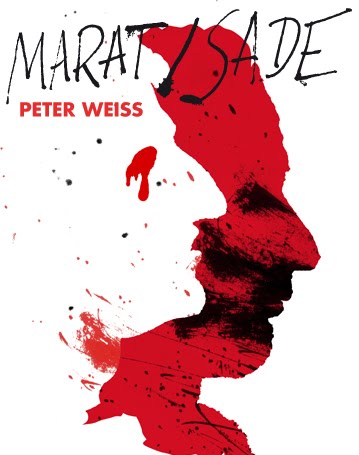
Should a play "work for you"? Preview 15 October 2011 Marat/Sade @ Royal Shakespeare Theatre, Stratford upon Avon


Marat/Sade - or to give its full title "The Persecution and Assassination of Marat as Performed by the Inmates of the Asylum of Charenton under the Direction of the Marquis de Sade" - is currently being revived by the RSC at Stratford.

This was always going to be a dangerous proposition, for despite Peter Weiss's German play being an intentionally provocative work, the RSC's 1964 production has passed into legendary status. Originally translated by Geoffrey Skelton, but brought to verse life by poet Adrian Mitchell, the original RSC version had been directed by Peter Brooks, and had starred Ian Richardson (as the Herald - though in the US production he took over the role of Marat), Clive Revill (as Marat) Patrick McGee (as De Sade) and Glenda Jackson (as Charlotte Corday). It was an incendiary play, and an incendiary production - still strongly recalled by all who saw it --- as the comments surrounding the current production indicate.

So bringing it back to life in the 21st century was always going to be a risky strategy as a way of demonstrating the RSC still had the power to be radical: firstly, because it is doing radical things elsewhere (both with new plays and the direction of some of its Shakespeare productions); and secondly because - guess what? It's a REVIVAL and what is ever going to be radical about revisiting the past?

Quite a lot it seems, and that the production may not quite work is only part of such radicalism.

*Note*
Do remember that I'm commenting here on a Preview performance (only the second). A few technical and performance hiccups were clearly still present, but no-one and nothing seemed to come to lasting harm. Note as well that the play is only on for approximately 3 weeks (opening 14 October and closing 5 November: I predict a spectacular finale suitable to the date when it closes).


Unsurprisingly, several people left the production at the interval which is timed approximately 2/3 of the way through the show --- the couple next to Neil grumpily stayed for the second part and she at least was clearly negatively comparing the show to the version she had previously seen [I didn't catch if it was the notorious first RSC version, it may have been the Daniel Craig one...]. If I had a pound for every time she muttered darkly "It's just not working for me" I'd have made at least a tenner, with which I'd have given her a subscription to a decent newspaper since she seemed to think the Daily Mail was a suitable read....

Anyway, in contrast, the woman sat beside me seemed to positively revel in this desperately uncomfortable play. She chuckled heartily many times, for although this is a play (and production) that throws harsh lighting on uncomfortable realities, it is not without absurd humour.

To say the play comes across as uneven need not necessarily be a criticism: rather there is nevertheless an inchoate quality to the performance as a whole that makes the production perhaps even more chaotic and unfathomable for its largely middle-class audience than they would anticipate. The RSC letter to advance ticket purchasers certainly tipped them off about the foreseeable combined violence, nudity and "religious imagery", but I don't know to what extent they were all ready for the distinctly non-revolutionary France 'setting' for the play.

What works best are some of these relocation updates and the directorial flourishes associated with these. Connections to the recent riots, the uprisings in the Arab Spring (and other Middle East associations) abound everywhere. Technology, particularly mobile phones, are used incredibly well and in a way that goes beyond mere invocations of Abu Ghraib but into thoughts of control and distractedness from humanity. The blurring between post-Revolutionary France and contemporary events feels even more heightened in this age of increasingly fast mass communication, certainly more than even the 1960s could have anticipated. When the crowd/the inmates cry out for their revolution there is a crackle of recognition that makes the text of the play as relevant as it would have been in the 1960s.

What work less well are some of the moments of vocalisation (sometimes the singing and the music, the spoken text and the noise become over-layered in a way that just makes them unintelligible - but it is never clear whether that may be the point). The production is also not helped by some of the racially iffy consequences of colour-blind casting: sometimes you really do have to think about what certain characters are doing, saying and gesturing to others in the light of each performers race. Additionally, one can't help but feel that the production doesn't quite break down enough the barriers between audience (within the play) and the theatre audience - for all the popcorn, thrown clothing and minor entries into the seated areas. The use of the thrust stage and balconies to place actors amidst the audience is already well-used by the RSC and so its use here perhaps needed to be even more radical and confrontational in order to challenge the audience out of their comfort zone of passive observers.

Nevertheless, there are some stand-out performances which for me made the production work and will make it memorable as an experience.

Jasper Britton as de Sade was incredible. At times he looks astonishingly like his father (actor Tony Britton) and I'm not sure if that makes the performance more or less disturbing. Certainly, his moments of transformation - he gets a number of costume changes - are carried off with breathtaking confidence. His de Sade is both manipulative and disconcertingly weak: perhaps in just the right measure. His playing against the control of Coulmier (Christopher Ettridge), the Governor of the Asylum is particularly well handled.

Similarly, Lisa Hammond makes for a discomforting Herald: her sexuality is heightened, not ignored, and her disability acknowledged and provocatively played upon. I hope she gets further opportunities with the RSC, and hopefully ones that allow her talents to be appreciated. She conveyed wit and malice with incredible power.

Arsher Ali also made for an excellent Marat, initially uncertain in his performance (as befitting his inmate status) but growing in frustration and self-awareness as the play progresses; his need to proclaim, his need to speak and be hear, sound like the buried sensibilities of reasoned analysis amidst a time of revolution. He is the most broken by the insistent reminders from Coulmier that it's now 1808 and things are different... (when really audience, actors, inmates and the play-within-play audience all know it is nothing of the sort).

Both Nicholas Day and Andrew Melville are under-used in this production, and both suffer enormously for their contributions to the play: but they nevertheless contribute to the unsettling feeling of incoherence that surrounds the performance. More disappointingly Corday (as played by Imogen Doel) never seems to take on the full weight of importance one feels she should have within the play. She comes across as a puppet to other's plans (both as Charlotte and the narcoleptic inmate playing her), which may be just right but somehow seems less pertinent than it could be.

Elsewhere, there are disconcerting and erratic performances from within the ensemble: Maya Barcot as Rossignol, Golda Rosheuvel as Cucurucu, and Amanda Wilkin as Kokol sing magnificently but can come across too often as performers playing inmates playing performers --- and I'm not sure that level of meta-playing is quite what the play wants to alert us to. Similarly, Lanre Malaolu as Duperret (the ever masturbating sex maniac) works best when in his moments of 'lucidity' and articulation - which is probably the intended counterpoint of his ever-more pathetic inability to exert physical self-control.

Despite my misgivings and uncertainties about the production 'working' - and the more I think about last night's play, the less certain I am what it would mean for the play to 'work' - everyone is clearly giving everything they have to this work and I can only imagine the exhaustion and psychological weirdness that must surround their performing in this hysterical play (since it is hysterical in so many senses). I can't help but applaud the effort of the RSC to challenge boundaries - but I'm not sure that reviving this play, with all its actorly baggage, was necessarily the best way to do it. The (sub)text references to contemporary events are well-intentioned, but I'm unclear about the extent to which audiences will be stirred to think differently as they may have done in the 1960s to the contemporary relevances invoked then. It's therefore an honourable take on a problematic work --- it will be interesting to see how others react.